
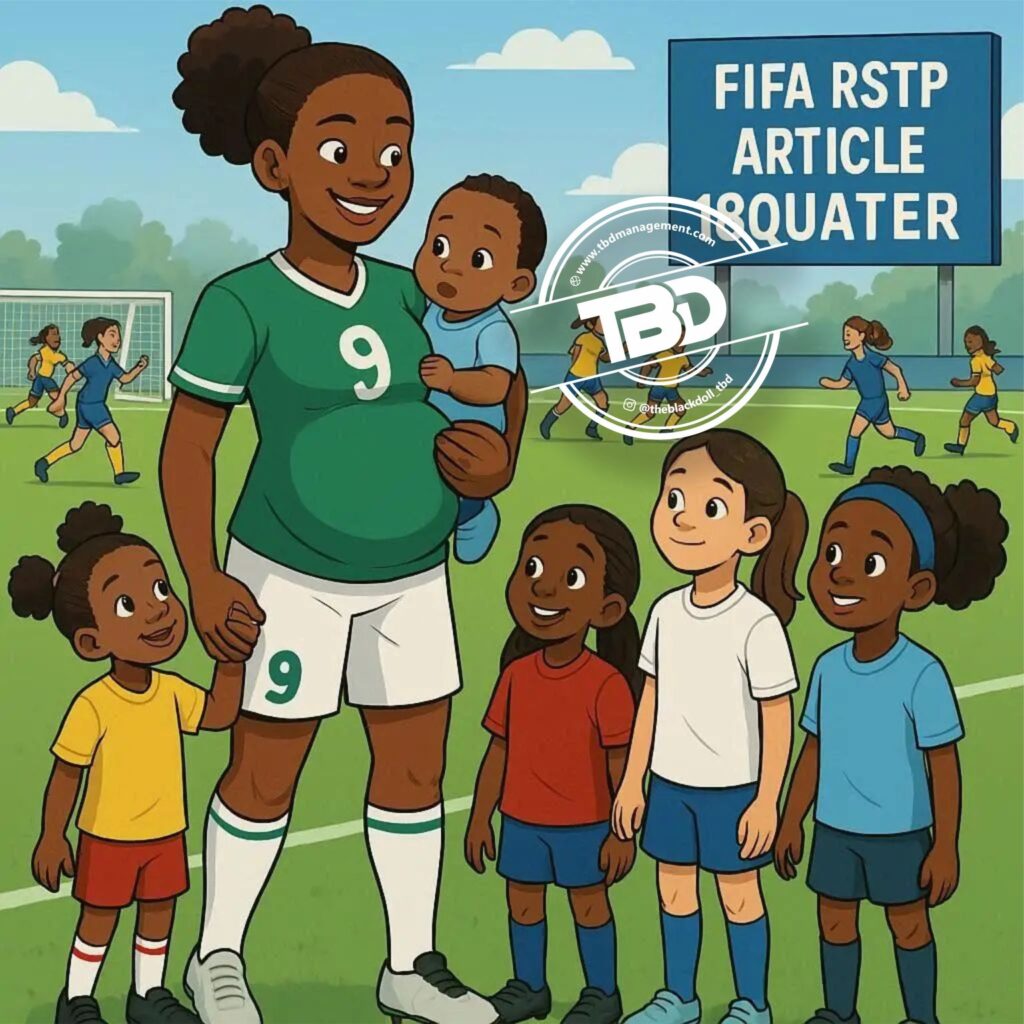
Imagine being a professional athlete at the peak of your career—scoring goals, fans cheering, and living the dream. Suddenly, you’re faced with a life-changing decision: career or motherhood? For many female footballers, this was the reality until quite recently.
At FLAM 2025 in Abuja, I presented on maternal health rights and contractual stability in football.
According to FIFPRO’s 2017 global survey of 3,600+ players:
➡️ Only 2% had children
↪️ 61% received no childcare support and just 8% received maternity pay
➡️ 47% said they would retire early to start a family
Imagine if nearly half consider leaving early for family, we risk losing incredible talent because the system isn’t designed to support them.
Until recently, the FIFA RSTP had no specific provisions for maternity rights. This gap meant countless female players faced systemic inequalities:
⛔ Short-term contracts (average length: 12 months)
⛔ Lack of written agreements (only 53% had formal contracts)
⛔ Termination during pregnancy
⛔ Misclassification as amateurs, stripping players of employment protections
The Turning Point was in January 2021, when FIFA introduced Article 18quater, guaranteeing:
✅ Contracts remain valid regardless of pregnancy.
✅ Termination due to maternity leave is presumed without just cause.
✅ Full salary until maternity leave begins.
✅ Paid maternity leave (minimum 14 weeks, two-thirds salary).
✅ Breastfeeding rights and reintegration support post-maternity.
…and in 2024, these rights were extended to adoptive parents, non-biological mothers, and female coaches—a significant milestone.
However, implementation remains a challenge. Many federations have yet to adopt these regulations nationally, leaving players vulnerable. The landmark case of Sara Bjork Gunnarsdottir v. Olympique Lyonnais illustrates this gap. Despite FIFA’s rules, Lyon applied French sick leave law, denying Sara her full salary during pregnancy. She fought back—and won—becoming the first player to successfully claim under FIFA’s maternity regulations.
What Needs to Happen:
🟢 Education & Awareness: Players must know their rights.
🟢 Stronger Enforcement: Federations should implement FIFA’s minimum standards—and go beyond.
🟢 Holistic Support: Childcare facilities, postpartum plans, and flexible registration rules must become the norm.
🟢 Regulatory Gaps: Surrogacy, miscarriage, and post-maternity protections need urgent attention.
As someone passionate about sports law and athlete welfare, I believe this conversation is long overdue. The regulations are a step forward—but now, it’s time for action.
What are your thoughts?
Should federations face sanctions for failing to implement maternity protections? How can we make contractual stability a reality for every female player?
To enjoy the full benefit of this post and read some comments, you can also view it on LinkedIn: