
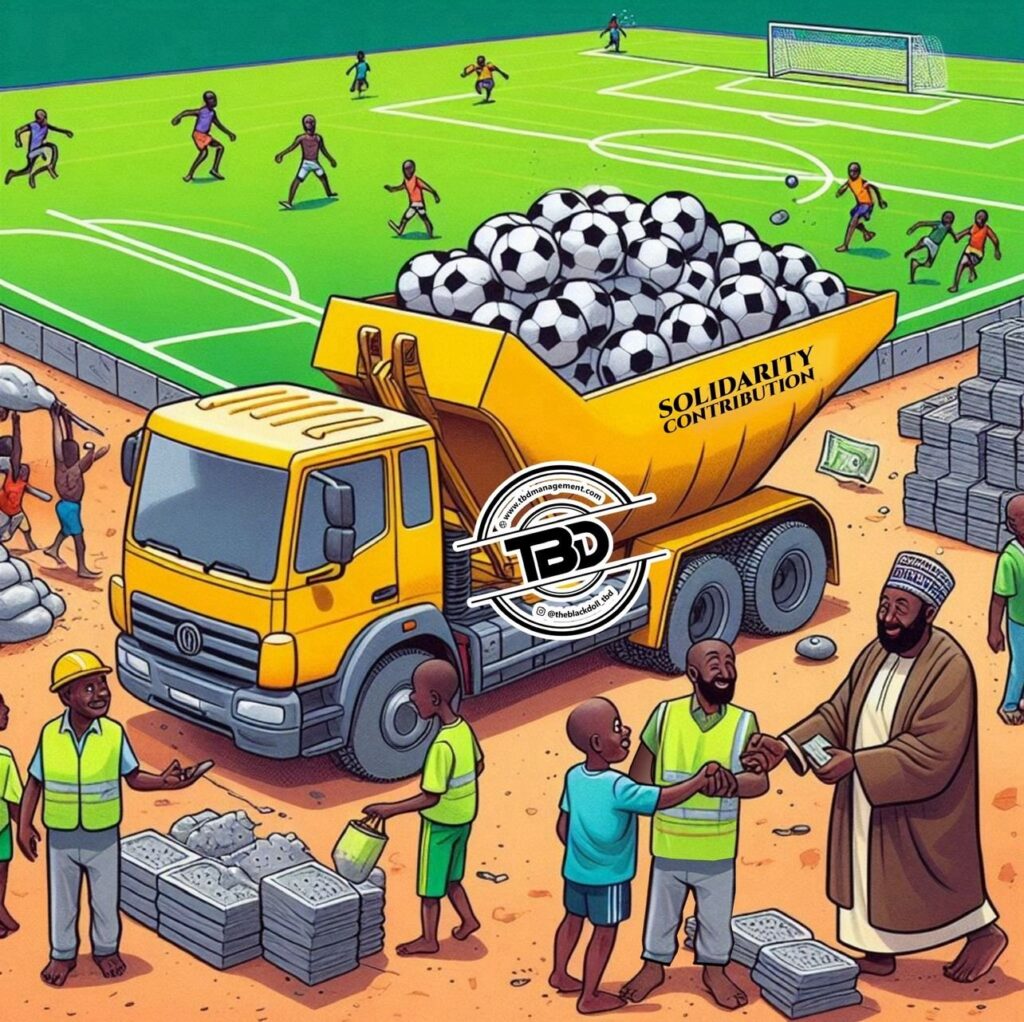
Part 1: FIFA Solidarity Mechanism – ARTICLE 21
Another one of my favourite topics 😍… because it gives back to the grassroots 👏🏽👏🏽👏🏽
I’ve received a lot of questions asking for clarification on solidarity contributions (and Training Compensation) so to avoid repeating myself, I thought I’d do articles on them. Also, with the FIFA Agent’s exam coming up, hopefully it serves as a refresher for those sitting the exam.
The FIFA Solidarity Mechanism is one of the training rewards which compensates training clubs for their involvement in the development of young players. Those who use it well tend to reinvest it into youth development ⚽️.
There are clubs in Nigeria and Ghana that I have assisted in recovering training rewards over the years and they have used it to improve, or should I say, upgrade the conditions of their facilities including purchasing new kits for the team; purchasing or refurbishing a team bus; purchasing footballs and other equipment; ensuring the players and coaching staff are covered under a medical insurance and some have used the money to install new training pitches.
This is one of the reasons I have been passionately advocating for these training clubs, and pleading with FIFA and the FIFA Clearing House SAS not to make it any more difficult for these clubs, that need this extra income so badly, to get their hands on the funds.
When are solidarity contributions due ⁉️
If a professional football player is transferred (permanently or on loan) before the expiry of his contract and a transfer fee is paid, all the clubs that were part of his training and education (between the years of his 12th and 23rd birthdays) are to receive a proportion of 5% of that said transfer fee.
Those who trained the player between the ages of 12-15 receive 5% of the 5% and those who trained the player between the ages of 16-23 receive 10% of the 5%. This is where that GCSE maths class (or a calculator 🥴) comes in handy!
A training club is entitled to receive solidarity contributions where:
(a) the player is transferred between clubs affiliated to different associations;
So for instance, a player is transferred from a club in Latvia 🇱🇻 to a club in France 🇫🇷
or
(b) the player is transferred between clubs affiliated to the same association, provided that the training club is affiliated to a different association.
In this instance, a good example is where a player is transferred from Brentford FC to Arsenal FC, both in England 🏴, but the training club is in Nigeria 🇳🇬.
What should you watch out for as a selling club ⁉️
It’s very important to look out for clauses in contracts that waive your rights to training rewards. Basically, some buying clubs will offer you a ballpark figure which includes all training rewards.
How are solidarity contributions calculated?
We’ll take a look at an example in Part 2.
—
To enjoy the full benefit of this post and some interesting comments, you can also view it on LinkedIn: